Home / Spot Comparison

Quadruped Inspection Systems vs. Boston Dynamics Spot

We integrate both Western and Chinese quadruped platforms — so this comparison is written from the buying side of the table, not the selling side. Here is how the options actually differ for industrial inspection programs.

Integrator's perspective Total program cost Customisation depth Support reality
First, credit where due

Spot is an excellent platform — and often overkill

What Spot does well

Mature motion control, a large installed base, documented SDK, and a track record at recognisable industrial sites. For research programs or high-profile deployments, it is a defensible default.

What most inspections actually need

Walk a defined route, carry thermal / gas / visual payloads, survive dust and rain, navigate GPS-denied areas, deliver data to a dashboard. That bar is met by platforms from Unitree (B2, B2-HD), DEEP Robotics (Jueying X20 / X30) and Micbot (MOVENEW T1 / P1 / P2) — not only Spot.

Where the decision really happens

Platform brand is one input. Total program cost, how custom the payload and software must be, lead time, and who supports the system in year three — these usually decide the purchase.

Declaration: QINQI Robotics is an independent systems integrator. We are not affiliated with Boston Dynamics, and we integrate multiple quadruped platforms from multiple manufacturers. Specifications and prices change — verify current terms with vendors directly. This page reflects our integration experience as of 2026.
Side by side

Program-level comparison for industrial inspection

DimensionBoston Dynamics Spot (OEM route)QINQI-integrated system (Chinese platforms)
Platform maturityExcellent; large installed base and public case studiesStrong for industrial inspection duty; platforms from Unitree, DEEP Robotics and other Chinese manufacturers have production-track records in energy, mining and rail deployments
Platform entry costPremium tier; published pricing is materially higher than Chinese equivalents — request current quotes from BDSubstantially lower for comparable inspection duty; competition among manufacturers keeps pricing aggressive
Payload flexibilityCurated ecosystem (Spot-compatible payloads); custom payloads go through BD integration pathsOpen integration: we mount and engineer the sensors your task needs — thermal, multi-gas, radiation probes, two-way audio — without ecosystem gatekeeping
Software opennessDocumented SDK; some layers remain closed; application software typically extraROS 2 + Python SDK as standard; inspection application, dashboards and reporting built to your workflow and owned by you
Lead time to working systemPlatform availability plus integrator scheduling; often longer for export-controlled or regional-service casesTypically 4–8 weeks from assessment to commissioned system, including payload build and software
Regional support & sparesDepends on your region’s BD channel; some regions have limited field presenceOne accountable integrator: QINQI holds the support relationship, spares strategy and firmware/software maintenance for systems we deliver
Data integrationAvailable through BD software products or third-party integratorsDirect REST API / webhook wiring into your SCADA, CMMS or historian — built in at commissioning
Best fitPrograms where brand validation, existing BD tooling or research-grade motion control is decisiveCost-driven industrial inspection programs that need a working system, custom payloads and accountable support
How to choose

Two honest checklists

Choose Spot (OEM route) when…

  • Your organisation requires a Western brand for stakeholder or procurement reasons
  • You already run BD tooling, payloads or a research stack built around Spot
  • Your use case pushes mobility limits where Spot’s motion control is proven

Choose a QINQI-integrated system when…

  • Total program cost over 3–5 years is the deciding metric
  • You need custom payloads or site-specific inspection software, not a curated set
  • You want one accountable partner for platform + integration + support

Do this either way

  • Define the inspection task and route first — platform second
  • Get the full system quoted (platform + payload + software + support), not just the robot
  • Ask who supports the system in year three, and in whose time zone
The number buyers care about

What a delivered inspection system actually costs

  • The platform is typically the smaller half of the program. Thermal cameras, gas arrays, integration engineering, software and multi-year support make up the rest — that is where an integrator’s efficiency matters most.
  • Lower platform cost frees budget for the payload that counts. The sensor set — not the legs — determines inspection value. Savings on the platform often buy a better thermal camera or more gas channels.
  • We quote per system, not per robot. Send us the site and the inspection task; the quote covers platform, payloads, software, commissioning and a defined support term. Prices for both routes move — current quotes beat any published figure.
Same task. Two routes. One quote each.
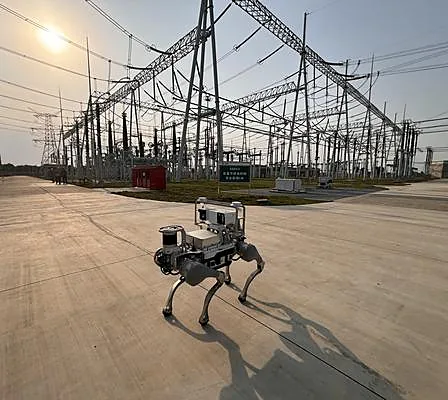
Quadruped inspection robot in a substation — the task defines the system, not the brand
The inspection task defines the system — brand is one input among many
FAQ

Frequently asked questions

Is Spot a good inspection robot?

Yes. Boston Dynamics Spot is a mature, well-engineered platform with a large installed base and a documented SDK. For many programs it is a sound choice. The relevant question for most buyers is total program cost: platform, payloads, integration, software and years of support — and whether your use case needs Spot-level capability or can be met by a well-integrated alternative at lower cost.

Why is a Chinese quadruped platform cheaper than Spot?

Competition and supply-chain maturity. Multiple manufacturers in China compete on industrial quadruped platforms, which pushes platform pricing down substantially versus a single Western premium vendor. For typical inspection duty — walking defined routes with thermal, gas and visual payloads — the platforms we integrate cover the task reliably at a lower entry cost.

What does QINQI actually add on top of the robot platform?

QINQI is a systems integrator, not a robot manufacturer. We select the platform for your site conditions, engineer the payload set (thermal, gas, radiation, audio), build the inspection software and reporting, integrate with your SCADA/CMMS, commission the system on site and support it afterwards. The platform is one component; the working inspection system is the product.

Can I get spare parts and support for Chinese quadruped platforms outside China?

Yes — that is part of our scope. QINQI handles regional support, spares strategy and firmware/software maintenance for the systems we deliver, so you deal with one accountable integrator rather than a cross-border vendor relationship. Specific support terms are defined per contract.

Related insights

Take the next step

See it applied to your industry

The platform is one decision. What your routes, payloads and standards actually demand is another. Start with the environment you already run.

Send the same requirements to both routes

Describe your site, routes and inspection task once. We’ll respond with the platform recommendation, payload plan, software scope and a delivered-system quote — so you can compare it line-by-line against any OEM offer.

✉ sales@qinqirobotics.com  ·  Response within 24h